
Featured

Everything you should know about IELTS Exam

IELTS stands for “International English Language Testing System”. It is a standardized test designed to measure the language proficiency of non-native English speakers. The test assesses the ability to communicate effectively in English in all four language skills: listening, reading, writing, and speaking. IELTS is accepted by many academic institutions, employers, and government agencies worldwide as a proof of English language proficiency. There are two versions of the test: the Academic version, which is designed for students who want to study at universities or other academic institutions, and the General Training version, which is intended for people who want to work or live in an English-speaking country.

It is a standardized test designed to assess the language proficiency of people who want to study, work, or immigrate in countries where English is the primary language of communication.

The test is recognized by more than 10,000 organizations worldwide, including universities, employers, immigration authorities, and professional bodies. The test assesses four language skills: listening, reading, writing, and speaking, and is available in two versions: Academic and General Training.

The Academic version is suitable for people who want to study at the undergraduate or postgraduate level, while the General Training version is designed for people who want to work or immigrate to English-speaking countries. The test is scored on a nine-band scale, with a score of 9 being the highest and 1 being the lowest.

The IELTS exam has four components; Listening, Reading, Writing and Speaking, and each is scored to determine an individual’s overall IELTS score.

The Listening section is designed to test the ability to understand main ideas and significant details in short, clear conversations. This section is 30 minutes in length and consists of four recorded conversations and monologues.

The Reading section tests both a candidate’s reading skills and understanding of language. The test includes questions on both academic and general topics. The section is 60 minutes long, with 40 questions that must be answered in that time.

The Writing section consists of two tasks; Task 1 and Task 2. Task 1 requires the candidate to describe a graph, diagram, process or any given data, while Task 2 requires the candidate to write an essay in response to a given point of view or argument. Both tasks are assessed and have a total time limit of 60 minutes.

The Speaking section also has two parts. Part 1 consists of a personal introduction, followed by a series of questions in which the candidate must talk about likes, and opinions. Part 2 is a test of the candidate’s
ability to make a long answer on a particular topic.

The Writing section consists of two parts. In Part 1, candidates must write an essay response in response to a given prompt. In Part 2, students must answer two questions that require extended argument or discussion of a particular topic.

The IELTS exam can be taken in several locations around the world. Candidates can choose to take the exam in either the paper-based or computer-based format. Paper-based exams are usually administered in the candidate’s native language while computer-based exams are administered in English.

To ace the IELTS exam, it is important to combine classroom instruction with practice tests and self-study. It is also important to become familiar with the structure of the exam and practice time management skills. Additionally, engaging in practice tests and mock interviews can help prepare the candidate for the real exam.

Scoring for the IELTS exam is divided into two sections: Listening and Reading, and Speaking and Writing. The Listening and Reading sections are scored from 0 to 9, while the Speaking and Writing sections are scored from 0 to 8. Candidates must achieve

There are many resources available online and offline that can help you prepare for the IELTS test. Here are some of the most popular ones:

  1. Official IELTS Website: The official IELTS website is a great place to start your preparation. It provides information about the test format, test centers, fees, and also offers free practice tests and sample questions.
  2. IELTS Preparation Books: There are many IELTS preparation books available in the market that can help you with your preparation. Some popular ones include “The Official Cambridge Guide to IELTS,” “Barron’s IELTS,” and “IELTS Trainer.”
  3. Online Courses: There are many online courses available that can help you prepare for the IELTS test. Some popular ones include IELTS Online, IELTS Master, and Magoosh IELTS.
  4. Practice Tests: Taking practice tests is a great way to prepare for the IELTS test. You can find free practice tests online, and many preparation books also include practice tests.
  5. Study Groups: Joining an IELTS study group can also be beneficial. You can find study groups online or in-person, and they can provide you with additional support and motivation.

Remember, the key to success in the IELTS test is consistent practice and dedication. Good luck with your preparation!

Featured

Top books for Graduate Record Examinations (GRE) preparation

The Graduate Record Examinations (GRE) is a standardized test that is required for many graduate programs in the United States and other countries. The test is designed to measure a student’s verbal reasoning, quantitative reasoning, and analytical writing skills, and is used by graduate schools to help determine a student’s readiness for graduate-level coursework. The test is offered in both computer-based and paper-based formats, and scores are valid for five years. The GRE is a widely accepted test, and many graduate programs in diverse fields like Business, Science, Technology, Engineering, Mathematics, and Humanities accept the scores.

When it comes to GRE, practice always helps in boosting your score. But often time people have limited time to prepare for GRE exams as they either take it during the last year of their undergrad or while they are working. In such a scenario, preparing using suitable materials becomes crucial for success. So I will write my recommendations for such books that have helped me and countless others in their pursuit of acing GRE tests.

I also highly recommend purchasing their Kindle version, which you can access on any device, including a PC, tablet, or mobile. Solving them on a digital screen will give you more confidence in working on a digital screen as your GRE tests will be all on a computer.

  1. The Official Guide to GRE General Tests: This is the first book that anyone preparing for GRE should get. It also contains the list of all math contents, including essential formulae and definitions that will be asked in the GRE. Reading the book and solving practice problems given in the book will give an idea of the difficulty level of the GRE. And the level of questions in this book matches best with the problems asked in the actual GRE tests.
  2. Official GRE Super Power Pack: If you have a little more time on your hands and want to delve deeper into GRE test preparation, I will recommend this book set. This set comprises three books, the Official Guide to the GRE General TestsOfficial GRE Quantitative Reasoning Practice Questions, and Official GRE Verbal Reasoning Practice Questions. And although I recommend getting all the three books together, another money-saving strategy would be to get the additional practice problems for the section where you feel you are lacking behind. An excellent way to access that would be to take a free GRE diagnostic test first and then decide where you would like to focus more. For example, in general, the native speakers score well in the verbal section but struggle slightly in the quantitative reasoning section. On the other hand, I have seen students from Asian countries struggling with the verbal section.

Although I recommend practicing using the official GRE practice sets, a few other books also provide a good set of problems that might help prepare. Purchasing these books will give you access to their online mock tests, which is a bonus.

Some of my favorites are as follows

  1. Manhattan Prep 5 lb book: If you have been out of touch with your high-school mathematics or feel your quantitative reasoning skills are rusty, I recommend this book for thorough preparation. The book covers every concept from quant to verbal that is part of the GRE. They have more than 1800+ practice problems for you.
  2. GRE prep with Magoosh: If you get easily overwhelmed with bulky books, this book might be for you. It is a collection of best strategies, practice questions, and study plans for GRE exams. The book also comes with a 20% discount on their online GRE test prep, which I highly recommend you check out. They also have a seven-day money return guarantee if you are not satisfied with their online study materials and practice problems.

A few more books for GRE prep are

  1. Princeton Review GRE Premium Prep, 2022: 7 Practice Tests + Review & Techniques + Online Tools (2022).
  2. GRE Prep Plus 2022: 6 Practice Tests + Proven Strategies + Online (Kaplan Test Prep).

If I missed any great resource that you found helpful for your GRE test prep, comment below, and I will update my list. Also, if you have used any of the resources for your preparation, comment your review below.

Thinking of grad school? Checking graduate school requirements is the first thing to do.


To check the program requirements for graduate applications, follow these steps:

  1. Visit the Program’s Official Website: Start by visiting the official website of the graduate program you’re interested in. Most universities and colleges provide detailed information about their graduate programs, including admission requirements. For example, if you want to apply for PhD in Computer Science at UC Berkeley, here’s a list of steps to check their graduate school requirements. Go to Google and search PhD Computer Science UC Berkeley, the first link gives information about the program. Next click on it and check the program website and check their frequently asked questions as well as admission requirements.
  2. Navigate to the Graduate Admissions Section: Look for a section specifically dedicated to graduate admissions on the program’s website. This section often contains information about application procedures, deadlines, and requirements.
  3. Review Admission Requirements: Within the graduate admissions section, you should find details about the admission requirements for the specific program. This may include information about academic qualifications, standardized test scores (such as GRE or GMAT), letters of recommendation, a statement of purpose, and any other specific documents or materials required.
  4. Check Prerequisites: Some graduate programs may have specific prerequisites, such as a certain undergraduate degree, coursework, or professional experience. Make sure you meet these prerequisites before applying.
  5. Look for Minimum GPA and Test Score Requirements: Programs often specify minimum GPA requirements and, if applicable, minimum scores required for standardized tests. Ensure that your academic achievements and test scores meet or exceed these minimums.
  6. Check Language Proficiency Requirements: If the program is in a language other than your native language, there may be language proficiency requirements. This typically involves submitting scores from English proficiency tests like the TOEFL or IELTS.
  7. Explore Application Deadlines: Note the application deadlines for the program. Missing deadlines can significantly impact your chances of admission.
  8. Contact the Admissions Office: If you have specific questions or if the information on the website is unclear, don’t hesitate to contact the admissions office of the graduate program. They can provide clarification and guidance on the application process and requirements.
  9. Check for Additional Requirements: Some programs may have additional requirements, such as a portfolio for arts-related programs or an interview. Be sure to identify and fulfill any additional requirements specified by the program.
  10. Consider Funding and Scholarships: If you’re interested in financial aid or scholarships, check if the program has specific requirements for these opportunities. Some scholarships may have additional application materials or criteria.
  11. Review Application Submission Guidelines: Understand the guidelines for submitting your application, including the preferred method for submitting transcripts, letters of recommendation, and any other required documents.

By thoroughly researching and understanding the program requirements, you can ensure that your application is complete and stands the best chance of being accepted. If in doubt, reach out to the admissions office for clarification and guidance.

Should I take the GRE exam if it is optional for college admissions?

The decision to take the GRE (Graduate Record Examination) exam when it is optional for college admissions depends on several factors. Here are some considerations to help you make an informed decision:

  1. Check Admission Policies:
  2. Strength of Your Application:
    • If your academic and professional background is strong, and you have other compelling aspects of your application (such as a high GPA, relevant work experience, strong letters of recommendation, etc.), you might not need to take the GRE.
  3. Program Requirements:
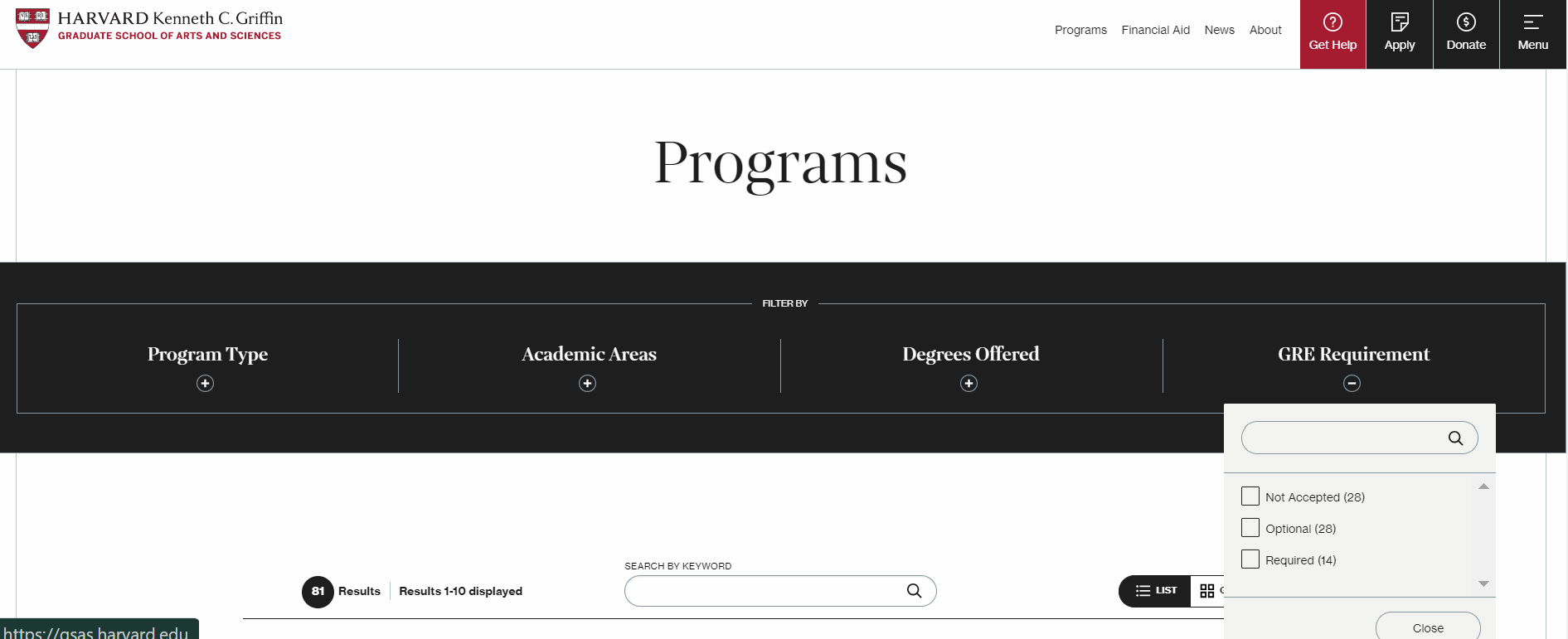
    • Consider the specific requirements of the program you are applying to. Some programs may place more emphasis on GRE scores, especially if they are in fields where standardized testing is traditionally more important. For example, the screen grab from Harvard admission portal shows there are programs where GRE is not accepted, few have GRE as optional, whereas for few programs it is required. So it is always encouraged to check the university websites for the grad courses admission requirements.
  4. Competitive Nature of the Program:
    • If the program is highly competitive and many applicants will likely have GRE scores, taking the exam could give you an additional opportunity to stand out.
  5. Personal Strengths and Weaknesses:
    • Assess your own strengths and weaknesses. If standardized tests are not your strong suit and you believe your application would be stronger without GRE scores, it might be reasonable to skip the exam.
  6. Application Cost and Effort:
    • Consider the cost and effort involved in preparing for and taking the GRE. If you have the time and resources to perform well, it might be worth it. However, if preparing for the GRE will detract significantly from other aspects of your application, you may want to weigh the benefits.
  7. Consult with Admissions Advisors:
    • If possible, reach out to admissions advisors or representatives from the programs you are interested in. They can provide guidance on whether taking the GRE is advisable based on the specifics of their admissions process.

In summary, the decision to take the GRE when it’s optional depends on the individual circumstances and the requirements of the programs you are applying to. It’s essential to carefully evaluate all aspects of your application and consider the specific policies of the institutions you are interested in before making a decision.

How can I strengthen my college applications?

Strengthening your college application involves showcasing your strengths, accomplishments, and unique qualities in a way that makes you stand out to admissions committees. Here are some tips to enhance your college application:

  1. Academic Excellence:
    • Maintain a strong GPA throughout high school.
    • Challenge yourself with rigorous courses, honors, and AP/IB classes when available.
    • Highlight any academic achievements or awards.
  2. Standardized Tests:
    • Prepare for and take standardized tests (SAT, ACT) if they are required or strongly recommended by the colleges you’re interested in.
    • Consider taking subject-specific SAT Subject Tests if applicable.
  3. Extracurricular Activities:
    • Participate in clubs, sports, or organizations that align with your interests and passions.
    • Take on leadership roles within your extracurricular activities.
    • Show a commitment to a few activities rather than spreading yourself too thin.
  4. Community Service and Volunteering:
    • Engage in meaningful community service or volunteering experiences.
    • Highlight the impact you’ve made and the skills you’ve developed through these experiences.
  5. Work Experience:
    • Include any relevant work experience, internships, or part-time jobs.
    • Emphasize skills gained and lessons learned from your work experiences.
  6. Letters of Recommendation:
    • Request letters of recommendation from teachers, counselors, or mentors who know you well and can speak to your abilities and character.
    • Provide them with information about your achievements and goals.
  7. Personal Statement/Essays:
    • Craft a compelling personal statement that tells your unique story.
    • Demonstrate self-reflection, growth, and a genuine interest in the chosen field of study.
    • Tailor your essays to each college’s specific prompts or values.
  8. Portfolio (if applicable):
    • If applying to an art, design, or performance program, submit a well-curated portfolio showcasing your work.
    • Follow any specific guidelines provided by the college.
  9. Interviews (if offered):
    • If interviews are part of the application process, take advantage of the opportunity to express yourself verbally.
    • Practice common interview questions and be ready to discuss your experiences and aspirations.
  10. Diversity and Inclusion:
    • Emphasize any experiences that contribute to diversity and inclusion.
    • Showcase your understanding of different perspectives and how you can contribute to a diverse campus community.
  11. Demonstrate Interest:
    • Attend college fairs or information sessions.
    • Visit the campuses of the colleges you’re interested in.
    • Write a thoughtful “Why Us?” essay, explaining why you’re a good fit for each specific college.
  12. Proofread and Edit:
    • Carefully proofread all application materials to ensure they are free of grammatical errors and typos.
    • Ask teachers or mentors to review your essays for feedback.

Remember that each college has its own criteria for evaluation, so tailor your application to meet the specific requirements and values of each institution. Additionally, authenticity and a genuine representation of yourself can go a long way in making a memorable impression on admissions committees.

How do you get started with the college admission process?


Preparing for college admissions can be a significant and sometimes complex process, but with careful planning and dedication, you can navigate it successfully. Here’s a step-by-step guide to help you get started:

1. Research Colleges: This might be the most crucial part of application process

  • Identify your academic and personal preferences, the major you want to take.
  • Consider factors like location, size, majors offered, campus culture, and extracurricular activities.

2. Set Goals:

  • Define your academic and career goals.
  • Consider what you want to study and how it aligns with your future plans.

3. Understand Admission Requirements:

  • Research admission requirements for each college.
  • Know the standardized test score, GPA, and other criteria.

4. Maintain a Strong GPA:

  • Focus on your academic performance throughout high school.
  • Take challenging courses to demonstrate your academic abilities.

5. Extracurricular Activities:

  • Participate in clubs, sports, or community service.
  • Show leadership and commitment.

6. Build Relationships:

  • Cultivate relationships with teachers who can write strong recommendation letters.
  • Seek mentorship or advice from school counselors.

7. Prepare for Standardized Tests:

  • Take the SAT or ACT, as required.
  • Consider test preparation courses or self-study.

8. Personal Statement/Essays:

  • Start drafting your personal statement or college essay early.
  • Reflect on your experiences and goals.

9. Letters of Recommendation:

  • Request letters of recommendation well in advance.
  • Choose recommenders who know you well and can speak to your strengths.

10. Financial Aid and Scholarships:

  • Research financial aid options and scholarships.
  • Understand deadlines for FAFSA and other financial aid applications.

11. Visit Colleges:

  • Attend college fairs.
  • Schedule campus visits to get a feel for the environment.

12. Prepare for Interviews:

  • Some colleges may require interviews.
  • Practice common interview questions.

13. Stay Organized:

  • Create a calendar with application deadlines.
  • Keep track of required documents.

14. Submit Applications:

  • Complete and submit applications on time.
  • Check and double-check for any errors.

15. Follow Up:

  • Confirm that all required documents are received.
  • Check application status regularly.

16. Prepare for Admissions Decisions:

  • Understand that acceptance and rejection are part of the process.
  • Have a backup plan in case your first-choice doesn’t work out.

17. Explore Gap Year Options (if necessary):

  • Consider taking a gap year if you need more time to decide or prepare.

18. Prepare for Transition:

  • If accepted, prepare for the transition to college.
  • Attend orientation programs and gather necessary information.

19. Celebrate Your Achievements:

  • Regardless of the outcome, be proud of your hard work and accomplishments.

Remember that each student’s journey is unique, and there is no one-size-fits-all approach. It’s crucial to tailor your preparation to your individual strengths, interests, and goals. Good luck!

Top podcasts to boost your listening and speaking skills in TOEFL and IELTS

Using podcasts to improve your English is a great idea, as it exposes you to authentic spoken language, various accents, and different topics. Here are some tips on how to effectively use podcasts for English language improvement:

  1. Choose Appropriate Content:
    • Select podcasts that match your current English proficiency level. Some podcasts are designed for beginners, while others are more advanced. Look for content that is interesting to you and aligns with your language goals.
  2. Listen Regularly:
    • Consistency is key. Make listening to podcasts a regular part of your routine. Daily or weekly listening will help you become more accustomed to the rhythm and nuances of spoken English.
  3. Mix of Topics:
    • Explore a variety of topics to expose yourself to different vocabulary and contexts. This can include podcasts on news, culture, science, technology, or any other area of interest.
  4. Active Listening:
    • Listen actively by trying to understand the main ideas and details. Take notes on new vocabulary, expressions, or phrases that you find challenging.
  5. Repeat and Mimic:
    • Pause and repeat sentences or phrases you find difficult. This helps improve pronunciation, intonation, and overall speaking skills. Try to mimic the natural rhythm of the speakers.
  6. Use Transcripts:
    • Some podcasts provide transcripts. Use these to follow along while listening. Reading along with the transcript can enhance your comprehension and help you identify new words.
  7. Discuss with Others:
    • Engage in discussions with language partners, teachers, or fellow learners about the content of the podcasts. This reinforces what you’ve learned and provides an opportunity to practice speaking.
  8. Focus on Different Accents:
    • Choose podcasts with speakers who have different accents. This exposure will improve your ability to understand various English accents, which is valuable in real-life communication.
  9. Combine with Other Learning Tools:
    • Use podcasts as part of a broader language learning strategy. Combine them with vocabulary building, grammar exercises, and other language learning resources.
  10. Set Goals:
    • Establish specific goals for your podcast listening. This could be related to vocabulary acquisition, understanding specific accents, or improving your listening skills in general.
  11. Create Your Own Content:
    • After listening to a podcast, try summarizing the main points or expressing your thoughts on the topic. This practice reinforces what you’ve learned and helps you actively use the language.
  12. Explore Language Learning Podcasts:
    • Consider podcasts explicitly designed for language learners. Some podcasts provide explanations of grammar, vocabulary, and language learning strategies.

Remember, language learning is a gradual process, and improvement comes with consistent effort over time. Adjust your approach based on your preferences and progress, and enjoy the learning journey!

While there may not be specific podcasts exclusively dedicated to TOEFL preparation, there are many podcasts that focus on English language learning, academic skills, and general language proficiency. Listening to podcasts in English can certainly help improve your language skills, which are crucial for the TOEFL exam. Here are ten podcasts that can contribute to enhancing your English proficiency:

  1. BBC Learning English Podcast:
    • The BBC offers a range of podcasts covering grammar, vocabulary, and general language learning.
  2. EnglishClass101:
    • This podcast provides lessons in English at different proficiency levels, including lessons specifically designed for exam preparation.
  3. TOEFL TV:
    • Although not a podcast, TOEFL TV on YouTube provides useful tips, strategies, and explanations for various sections of the TOEFL exam.
  4. IELTS and Beyond:
    • While this podcast primarily focuses on IELTS, many of the language skills covered are relevant to TOEFL as well.
  5. The Fluent Show:
    • This podcast covers various aspects of language learning, including tips and strategies for improving listening, speaking, and overall language proficiency.
  6. English as a Second Language (ESL) Podcast:
    • This podcast offers real-life English conversations, which can be beneficial for improving listening skills.
  7. EngVid:
    • EngVid provides video lessons on various English language topics, including grammar, vocabulary, and exam preparation.
  8. TOEFL iBT Insider:
    • This podcast focuses specifically on TOEFL preparation, providing insights into the test format, tips, and strategies.
  9. The English We Speak (BBC):
    • A short and fun podcast series by BBC, covering common phrases and expressions used in everyday English.
  10. TOEFL Talks:
    • TOEFL Talks by ETS (the organization that administers the TOEFL) covers a range of topics related to English language learning and test preparation.

Remember to use a variety of resources for your TOEFL preparation, including official materials, practice tests, and targeted study guides. Additionally, actively engage with English content, such as podcasts, to improve your listening skills and overall language proficiency.

How to write an effective college essay?

A college essay, also known as a personal statement or admissions essay, is a written document that is an integral part of the college application process. It is a piece of writing that allows prospective college students to introduce themselves to admissions committees and provide insights into their personalities, experiences, values, and aspirations. College essays typically require applicants to respond to specific prompts or questions from the colleges or universities they are applying to.

The importance of a college essay in the college application process cannot be overstated. Here are some key reasons why college essays are significant:

  1. Personal Insight: College essays provide a window into the applicant’s character and individuality. They offer a unique opportunity for applicants to express who they are beyond test scores, grades, and other application materials.
  2. Differentiation: College admissions are highly competitive, and many applicants have similar academic profiles. A well-crafted essay can help an applicant stand out and be remembered by the admissions committee.
  3. Fit with the Institution: Colleges seek students who meet their academic criteria and contribute positively to their campus community. The essay allows applicants to demonstrate why they are a good fit for the college or university.
  4. Demonstrated Skills: Writing a compelling essay showcases an applicant’s communication, writing, and critical thinking skills. It’s an opportunity to demonstrate the ability to express oneself effectively.
  5. Storytelling: A well-told personal story in an essay can be memorable and impactful. It can evoke emotions and connect the applicant and the reader.
  6. Gauging Motivation and Ambition: Admissions committees are interested in understanding applicants’ motivations and ambitions. Essays can reveal what drives the applicant and what they hope to achieve in college and beyond.
  7. Overcoming Challenges: Essays often allow applicants to discuss challenges or setbacks and how they’ve grown from these experiences. This can demonstrate resilience and maturity.
  8. Creativity and Originality: Applicants can choose how they approach the essay prompt and how they tell their story. This provides room for creativity and originality in their writing.

In summary, a college essay is a critical component of the college application because it provides a holistic view of the applicant and helps admissions committees make more informed decisions. It allows applicants to go beyond the numbers and statistics and show who they are as individuals. Therefore, applicants must invest time and effort into crafting a well-written, authentic, and compelling college essay reflecting their unique qualities and aspirations.

How to write an effective college essay?

An effective college essay requires careful planning, thoughtful reflection, and attention to detail. Here’s a step-by-step guide to help you craft a compelling college essay:

  1. Brainstorm Ideas:
    • Reflect on your life experiences, values, interests, and goals. Consider moments that have had a lasting impact on you. Brainstorm ideas related to your chosen topic.
  2. Create an Outline:
    • Develop an outline to organize your thoughts and structure your essay. Plan the introduction, body paragraphs, and conclusion. Decide on the main points you want to cover in each section.
  3. Write a Captivating Introduction:
    • Begin your essay with a hook that grabs the reader’s attention. This could be an anecdote, a quote, a thought-provoking question, or a compelling statement.
    • Provide some context to introduce your topic and its significance.
    • Clearly state your thesis or the central theme of your essay.
  4. Develop Your Story in the Body:
    • Use the body paragraphs to tell your story and support your thesis.
    • Include specific details, anecdotes, and examples to illustrate your points. Show, don’t tell.
    • Reflect on the experiences or lessons learned from the situation or event you’re discussing.
    • Connect your personal experiences to broader themes or values.
  5. Demonstrate Personal Growth:
    • Emphasize how the experience or topic has contributed to your growth, self-awareness, or development.
    • Discuss any changes in your perspective, values, or goals that have resulted from this experience.
  6. Be Authentic and Sincere:
    • Be yourself in your writing. Avoid trying to present a perfect image; admissions committees appreciate authenticity.
    • Use your own voice and writing style to convey your personality.
  7. Stay Focused:
    • Stick to your chosen topic and the central message of your essay. Avoid going off on tangents or including irrelevant information.
  8. Create Smooth Transitions:
    • Use transitional phrases and sentences to ensure a smooth flow between paragraphs and ideas. This helps your essay read coherently.
  9. Write a Strong Conclusion:
    • Summarize the key points made in your essay.
    • Reiterate the significance of your topic or experience.
    • End with a memorable closing statement that leaves a lasting impression.
  10. Revise and Edit:
    • After completing your first draft, take the time to revise and edit your essay. Check for grammar, spelling, punctuation, and clarity.
    • Consider the overall structure and organization of your essay.
  11. Seek Feedback:
    • Ask teachers, parents, or peers to review your essay and provide constructive feedback. They can offer valuable insights and help you refine your writing.
  12. Finalize Your Essay:
    • Make any necessary revisions based on feedback and proofreading. Ensure that your essay meets the word or page limit specified by the college.
  13. Proofread Carefully:
    • Before submitting your essay, proofread it carefully to ensure there are no typos or errors. Reading it aloud can help you catch awkward phrasing or issues with flow.
  14. Follow Submission Guidelines:
    • Follow the college’s application instructions for submitting your essay. Double-check all application deadlines and requirements.

Remember that an effective college essay is one that allows you to convey your unique qualities, experiences, and aspirations to the admissions committee. Take your time, be thoughtful, and aim to create an essay that leaves a strong and positive impression on the reader.

Common mistakes to avoid while writing college essays

When writing a college essay, it’s essential to avoid common mistakes that can detract from the quality and impact of your essay. Here are some common pitfalls to steer clear of:

  1. Clichés and Generic Statements: Avoid clichés, vague statements, or generic language. Be specific and use concrete examples to illustrate your points.
  2. Overly Formal or Stilted Language: Your essay should sound like you. Avoid overly formal or academic language that doesn’t reflect your natural voice.
  3. Repetition: Repeating the same ideas or information throughout your essay can make it less engaging. Ensure that each paragraph contributes something new to your overall narrative.
  4. Lack of Focus: Stay on topic and maintain a clear and focused narrative throughout your essay. Avoid going off on tangents or including unrelated information.
  5. Tone and Attitude: Be mindful of your tone. While you should be honest and reflective, avoid coming across as overly negative, arrogant, or self-pitying.
  6. Exaggeration or Fabrication: Be truthful in your essay. Exaggerating achievements or fabricating stories can damage your credibility and harm your chances of admission.
  7. Failure to Edit and Proofread: Submitting an essay with grammar and spelling errors reflects poorly on your attention to detail. Always edit and proofread your essay carefully.
  8. Lack of Depth and Reflection: Don’t simply recount events; reflect on their significance and how they’ve shaped you. Admissions committees are interested in your insights and self-awareness.
  9. Lack of Originality: Avoid using cliché or generic topics that have been overused in college essays, such as sports victories, travel experiences, or community service trips. Choose a topic that allows you to stand out.
  10. Inappropriate Content: Be mindful of your content. Avoid discussing controversial or inappropriate topics, including sensitive political or religious issues.
  11. Ignoring Word or Page Limits: Adhere to any word or page limits specified by the college. Going significantly over or under the limit can negatively impact your application.
  12. Neglecting the Conclusion: Your essay’s conclusion is your last chance to leave a strong impression. Don’t rush through it; use it to summarize key points and reiterate your main message.
  13. Overuse of Thesaurus: Using a thesaurus to find complex or unfamiliar words can make your writing seem forced and unnatural. Use language you are comfortable with and that accurately conveys your message.
  14. Leaving It to the Last Minute: Rushing through the writing process and submitting an essay without sufficient time for revision and editing can result in a subpar essay.
  15. Not Seeking Feedback: Failing to seek feedback from teachers, counselors, or peers can lead to missed opportunities for improvement.

By avoiding these common mistakes, you can increase the quality and effectiveness of your college essay, making it more compelling and memorable for the admissions committee. Remember that the essay is your chance to showcase your personality and unique qualities to the colleges you are applying to, so take the time to craft it carefully.

How can you use Rakuten as a a student to save money and earn airmiles for free travel?

Rakuten’s cash back program is a popular way for shoppers to earn rewards and save money on their online purchases. It’s important to note that the availability of cash back offers can vary by retailer and location, so users should always check Rakuten’s website or app to see which stores are currently participating in the program and what cash back rates are being offered. Additionally, the cash back earnings can take some time to become available in your Rakuten account, typically within a few days to a few weeks, depending on the retailer’s return policy and confirmation process.

Rakuten Cash Back, often referred to simply as “cash back,” is a rewards program offered by Rakuten, an online shopping platform. It allows users to earn a percentage of their purchase amount as cash back when they shop at participating online retailers through the Rakuten platform. Here’s how it works:

  1. Shop Through Rakuten: To earn cash back, users start by visiting Rakuten’s website or using their mobile app. They then search for the specific online store or retailer where they want to make a purchase.
  2. Activate the Cash Back Offer: After finding the desired store, users click on the store’s link within Rakuten. This action activates the cash back offer for that retailer. The user is then redirected to the retailer’s website.
  3. Make a Purchase: On the retailer’s website, users can shop for products or services as they normally would. They can add items to their cart, proceed to checkout, and complete their purchase.
  4. Cash Back Earnings: After the purchase is made, Rakuten tracks the transaction and calculates the cash back earned based on the percentage specified in the cash back offer. This percentage can vary from store to store and can also change periodically.
  5. Cash Back Accumulation: The cash back earnings are accumulated in the user’s Rakuten account. Users can check their account to see how much cash back they have earned.
  6. Redemption: Rakuten users can redeem their cash back earnings in one of two ways:
    • Receive a check in the mail: Users can request a physical check to be sent to them.
    • Receive cash back via PayPal: Users can choose to have their earnings deposited directly into their PayPal account.
    • Receive cash back via amex membership poitnts.
  1. Sign Up for a Rakuten Account:
    • Start by creating a free Rakuten account. This is the first step to accessing cash back and various deals.
  2. Install the Rakuten Browser Extension:
    • To make it even easier to earn cash back, install the Rakuten browser extension (available for most web browsers). It will notify you of cash back opportunities and automatically apply cash back to your purchases when you shop through Rakuten’s partner stores.
  3. Shop Online Through Rakuten:
    • Whenever you plan to make an online purchase, whether it’s for textbooks, electronics, clothing, or even ordering food delivery, visit Rakuten first. Search for the retailer or product you’re interested in, and click through the Rakuten link to that store. This ensures you earn cash back on your purchases.
  4. Look for Student Discounts:
    • Keep an eye out for stores that offer student discounts in addition to cash back through Rakuten. Many online retailers offer special discounts to students, and when combined with cash back, you can save even more.
  5. Stack Coupons and Deals:
    • Rakuten often features coupon codes and special promotions on its website. Stack these with cash back offers to maximize your savings. Look for additional deals like free shipping or buy-one-get-one promotions.
  6. Use Rakuten for Travel:
    • When booking flights, hotels, or rental cars for academic conferences or vacations, use Rakuten to earn cash back. Many travel websites and airlines partner with Rakuten.
  7. Refer Friends and Family:
    • Rakuten has a referral program that allows you to earn extra cash back when you refer friends and family to join. Share your referral link to boost your earnings.
  8. Set Up Notifications:
    • Enable notifications from Rakuten to stay informed about special promotions, double cash back events, and limited-time offers. This way, you won’t miss out on great deals.
  9. Redeem Your Earnings Wisely:
    • When you’ve accumulated enough cash back, consider redeeming it for a gift card or PayPal payment. Use this extra cash to offset your student expenses or treat yourself.
  10. Budget and Plan Your Purchases:
    • Take advantage of cash back offers when you plan your purchases. This can be especially helpful for big-ticket items like laptops or textbooks.
  11. Stay Informed:
    • Keep an eye on Rakuten’s blog and social media channels for updates on the latest deals, promotions, and tips for saving money.

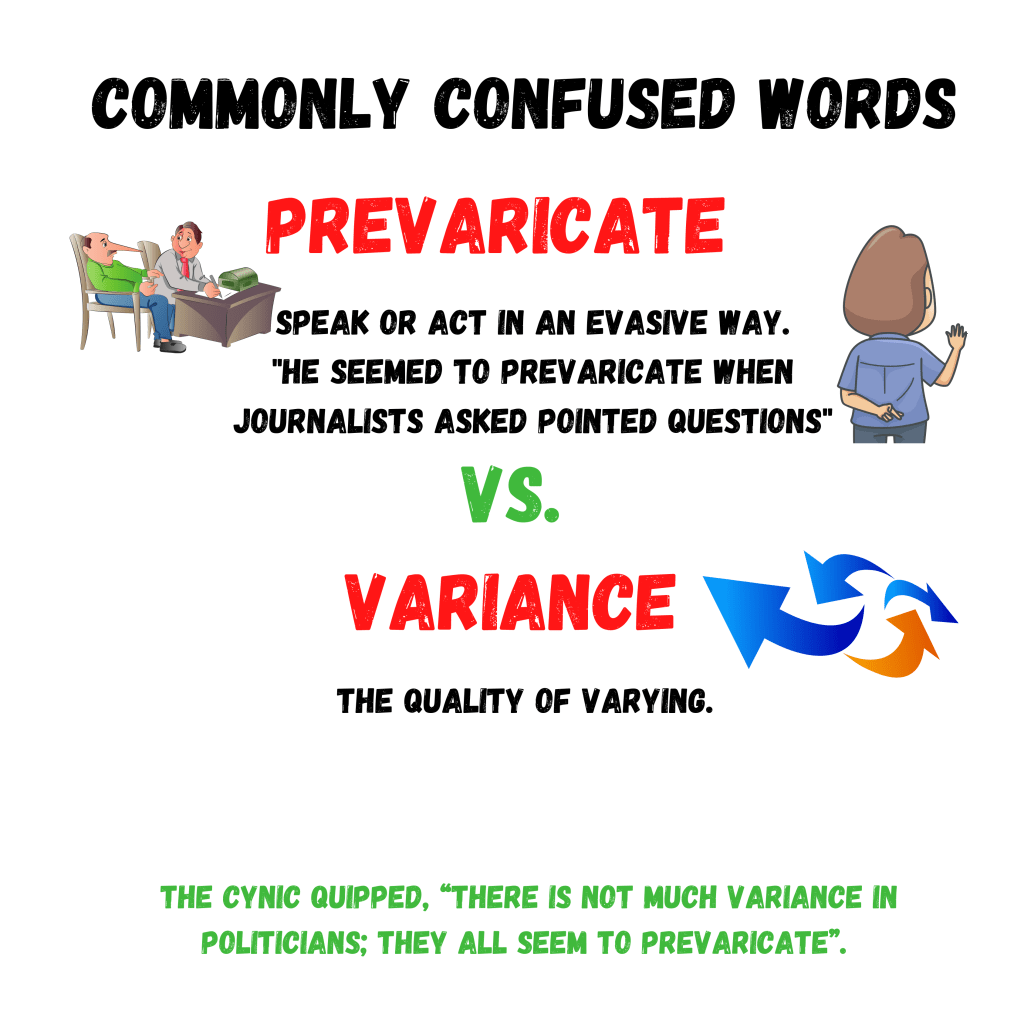
Often confused words

A few often confused words often asked in exams

  1. Accept vs. Except: “Accept” means to receive or agree to something, while “except” means to exclude or leave out.
  2. Affect vs. Effect: “Affect” is usually a verb meaning to influence or have an impact on something, while “effect” is usually a noun meaning the result or consequence of something.
  3. Complement vs. Compliment: “Complement” means to complete or match something, while “compliment” means to praise or admire something.
  4. Its vs. It’s: “Its” is a possessive pronoun meaning something belongs to “it,” while “it’s” is a contraction of “it is” or “it has.”
  5. Their vs. There vs. They’re: “Their” is a possessive pronoun meaning something belongs to “them,” “there” is an adverb referring to a location or a situation, and “they’re” is a contraction of “they are.”
  6. Lose vs. Loose: “Lose” means to no longer have something or to fail to win, while “loose” means not tight or to release something from restraint.
  7. Then vs. Than: “Then” refers to a specific point in time or a sequence of events, while “than” is used in comparisons to show a difference in degree or amount.
  8. Your vs. You’re: “Your” is a possessive pronoun meaning something belongs to “you,” while “you’re” is a contraction of “you are.”

How much does it cost to take GRE exam?

How much does it cost to take GRE exam?

The cost of taking the GRE (Graduate Record Examination) varies depending on the country in which you take the test. In most countries, the cost of the test is $220 USD, but in some countries, it may be higher due to local taxes and fees. Additionally, there are some optional services that you can purchase for an additional fee, such as sending your scores to more institutions or receiving a paper copy of your score report.

It’s important to note that the cost of the GRE is subject to change, so it’s a good idea to check the official GRE website for the most up-to-date pricing information in your region.

For more information, visit: https://www.ets.org/gre/test-takers/general-test/register/fees.html

Additional fees may apply for services such as rescheduling, changing your test center, or sending scores to more than four programs. The fees for these services vary depending on the location and type of service you require.

Special handling requests

Special Handling RequestFee
Rescheduling fee — China$53.90
Rescheduling fee — All other areas of the world$50
Changing your test center$50

Scoring services

Access the following scoring services in your ETS account. Any scoring service not listed below, such as the GRE Diagnostic Service, doesn’t have an associated fee.

Service                Fee
Additional Score Reports (ASR) — Per recipient$30
Question-and-Answer review service — Verbal Reasoning & Quantitative Reasoning sections  only (New York State residents only)$50
Score Review for Analytical Writing measure$60
Score Reinstatement Fee$50

If you are looking for a an online resource for GRE test prep that can help boos your scores and chances of getting admission into your dream university, check out Magoosh.